
CCNS athlete Chris Pulomena recently went back-to-back, winning the USA Cycling Masters 35+ National Time Trial Championship for the second consecutive year.
The result might suggest that Chris has the formula figured out. The reality is more interesting. His path to becoming a repeat national champion has included years of trial and error, increasingly specific training, plenty of aerodynamic experimentation, setbacks, and a willingness to keep refining the details.
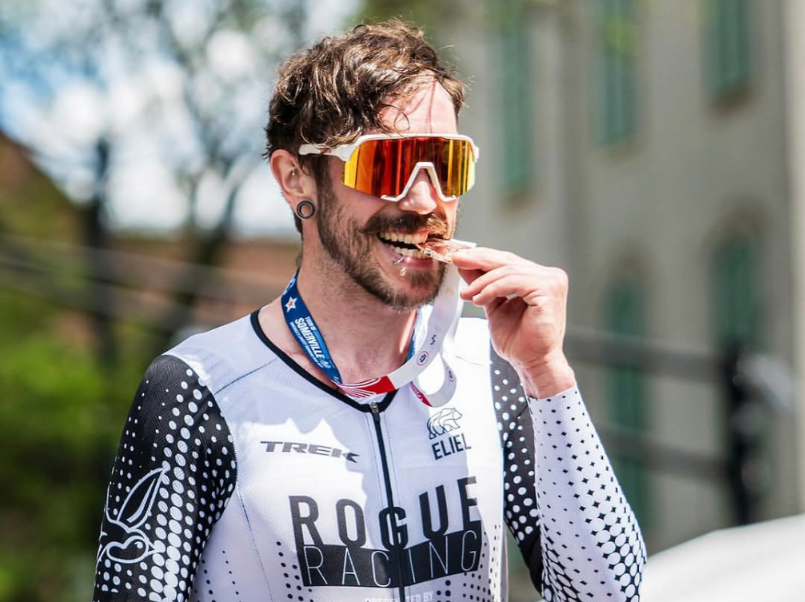
That is often what high-level coaching looks like. There is rarely one breakthrough workout or secret piece of equipment. Progress comes from years of consistent work, honest evaluation, and increasingly precise decisions about what an individual athlete needs.
We caught up with Chris and his coach, Ben Wolfe, after Nationals to talk about what has made the difference.
Chris, what do you think has had the biggest impact on your progression from being competitive to becoming a repeat national champion?
I think initially it was mostly fitness, but also, I definitely wasn’t aero at the beginning. I think I made five attempts at winning a state championship before I finally got one. There were probably five years of tweaking my position, figuring things out, and doing a lot of TT bike-specific training.
Joining CCNS was definitely a big bump in the right direction. Getting onto a program that was more than just something like TrainerRoad made an immediate difference. I was doing more variety, actually training fewer hours, and within that first year I was stronger than I had ever been.
Ben, when you first began coaching Chris, what did you see in him as an athlete, and what changes helped him make that initial jump?
What stood out immediately was how focused Chris is on the craft. He wasn’t looking for shortcuts. He genuinely wanted to understand the why behind the process, and that curiosity makes someone incredibly coachable.
He already had a strong engine, but like a lot of motivated athletes, the way he got there was to simply do more and more. Further improvement would come from making sessions more intentional.
Ironically, once every session had a job to do, he needed fewer hours to keep improving. We weren’t trying to maximize training volume. We were trying to maximize adaptation.
Looking back, I think that’s one of the biggest lessons. Success rarely comes from doing more. It comes from consistently doing the right things, at the right time, for the individual athlete.
Chris, you’ve gone deep into the aerodynamic side of the sport, including time in the Silverstone wind tunnel and having a custom skinsuit created specifically for time trialing. What has all that testing taught you?
One of the biggest lessons is that what you think will be faster isn’t always faster.
In my first wind tunnel session, my arm pads came up three centimeters, and I was faster. That didn’t make sense to me beforehand. Skinsuits were another eye-opener. Everyone understands that a suit that’s loose and wrinkled can be slower, but a suit that’s too tight can also be slower. Turns out when it’s too tight, the fabric becomes almost porous, which ends up being less slippery in the wind.
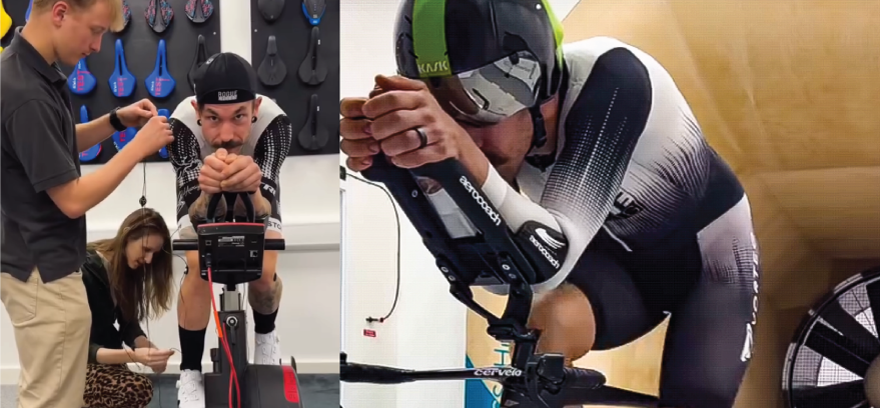
So everything is optimized for the position. When I’m standing upright in my skinsuit, it looks a little awkward. But when I get into my TT position, everything sits where it’s supposed to.
All that said, everyone should know that the wind tunnel expedites the process, but you don’t need a wind tunnel to make yourself faster.
I still use a repeatable four-mile stretch of bike path to test things like tire pressure, helmets, or wheels. I’ll do an A/B, A/B test at the same power on the same day and look for consistency. I’ve tested two very expensive front wheels that way and found basically no measurable difference. That saved me from having to switch.
Bottom line: You can make a lot of headway just by being curious and testing things yourself.
Time trialing is clearly more than a test of fitness. It is a skill, and in some ways an art. Is there a lesson from your racing that applies to athletes even if they never race a time trial?
Something I tell myself that I think works for everyone is that “By the time I’m standing on the start line, all I can do is what I can do.” If I need to hype myself up to somehow find another ten watts, I probably didn’t train enough. It’s rare that you suddenly rise to the occasion and become something different on race day. But you can always fall back on good training.
If you’ve ticked all the boxes and you’ve done the effort in training, there’s confidence in knowing, I’ve done this before. I can do it again today.
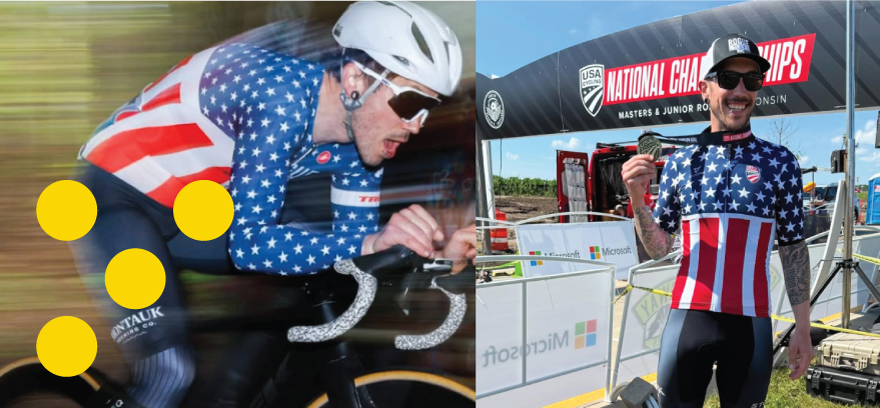
That distinction matters. Confidence is not something an athlete needs to manufacture on the start line. It is evidence accumulated through preparation: completing the work, practicing the demands of the event, and learning how to respond when things do not go perfectly.
Let’s talk about your National Championship victory. How do you approach pacing for something so high-pressure?
I usually think about the race in sections. The first third is about keeping things in check. In the second third, you’re going for it a little more, but you still need some restraint. Then at the end, it’s whatever you have left.
Being conservative early is difficult because the first five or ten minutes can feel amazing. You look down and you’re 30 watts over target and think, “I can do this all day.”
Then reality sets in.
Coach Ben helps me take a much more nuanced approach to the pacing strategy, too. Very rarely is the fastest time trial just picking one wattage and holding it from start to finish.
You have to understand the course. Where are the headwinds? Where are the climbs? Where should you let the power come down? Where does it make sense to push harder?
Ben, how did you translate the demands of this year’s championship course into Chris’s pacing strategy and training?
Even the flattest race course has places where watts are worth more and places where they’re worth less. Our job is to identify those opportunities before race day.
Five days before the race, we completed one final TT-specific session on the race bike that mirrored the pacing strategy we’d use on race day. The workout alternated controlled under-threshold sections with planned surges over threshold, just as the course demanded. It wasn’t about building more fitness at that point. It was one final rehearsal, reinforcing the pacing, position, and execution we’d spent months preparing.
This is where experienced coaching extends beyond prescribing a target wattage. Coach Ben and Chris work backward from the course, conditions, and likely race dynamics to determine where Chris’s energy can create time and where restraint is the faster choice.
Chris, you don’t necessarily need to have the biggest engine to ride the fastest time. Where else is that time won?
That is definitely true. I will go out on a limb and say that I didn’t have the highest power out of everyone racing at either of the National Championships I’ve won.
For example, two years ago, the course had four corners every lap. I literally spent training sessions practicing corners on my TT bike because it handles differently than my road bike. This year there were two turnarounds, so I practiced those, coming into the turnaround at race pace, getting through it quickly, making the acceleration and getting back up to speed.
There’s so much nuance to time trialing. You analyze the course and then make the training specific to what that course actually demands.
The little things add up.
For someone considering making the trip to race a National Championship, what would you want them to know?
Get there early. At least two days before. Get yourself situated and see the course. I rode the TT course twice before racing it, and when I did the Natz road race, I rode that course ahead of time too. Recon is really important.
Another big thing I’d tell someone is that progress isn’t linear. Sometimes there’s a step backward. Sometimes there’s an off year (or month, or week, etc). You have to keep going.
People see that I won back-to-back national titles, but they didn’t see the five years when I wasn’t winning the event I was trying to win. I had a bad crash in 2022, and there was a point when I didn’t know if I’d ever get back to the level I’d reached before it. It probably took me two years. That was humbling.
Success doesn’t happen overnight. There are going to be setbacks. But if you keep going, keep trying, and want it enough, you can get there.
Ben, when people see two consecutive national championships, they may assume Chris possesses something other athletes do not. From a coach’s perspective, what has actually allowed him to reach this level?
Winning a National Championship is an incredible accomplishment. Winning back-to-back titles isn’t simply doing the same thing twice, or doubling the effort from the year before. In many ways, it’s even harder. The expectations are higher, the target is on your back, and you have to show up with the same hunger after already reaching the top.
Chris did this by spending years stacking small advantages. He’s incredibly patient with the process. He communicates well, questions assumptions, and isn’t emotionally attached to doing things a certain way. If the data suggests something is faster, he’s willing to change.
Perhaps most importantly, he’s remained consistent through the setbacks mentioned. At no point did the focus shift away from the process. He kept showing up!
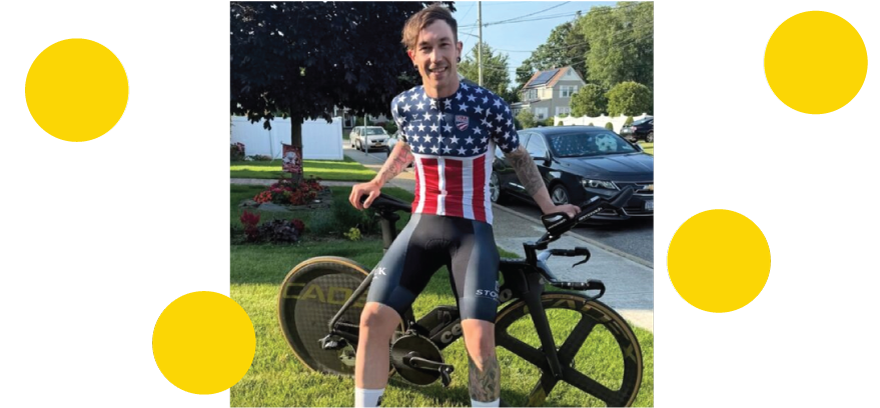
The Work Behind the Result
“Repeat National Champion” makes for a compelling headline. What Chris’s story illustrates even better is everything that happened before the headline: years of consistent training, missed attempts, setbacks, course reconnaissance, pacing practice, aerodynamic testing, and a willingness to keep questioning whether something could be done a little better.
That is where the depth of a coach-athlete relationship matters. The job is not simply to prescribe more work. It is to understand the athlete, identify what the event truly demands, and keep refining the process as new information emerges. Sometimes the right decision is to push harder. Sometimes it is to train fewer hours, practice a turnaround, adjust a pacing plan, or leave an expensive piece of equipment unchanged because the evidence says it is not faster.
Sometimes progress involves a wind tunnel.
Sometimes it involves repeatedly riding the same four-mile stretch of bike path at two different tire pressures.
And sometimes it means staying with the process through an off week, an off year, or a major setback. Chris’s two national championships were won on race day, but they were built through years of small, thoughtful decisions that eventually added up to the top step.
Congratulations, Chris and Ben!